
FintechZoom Rivian Stock Forecast
Rivian is a growing name in the electric vehicle (EV) industry, often compared to Tesla.
Since its IPO in late 2021, investors have debated its potential for long-term success.
The shift toward clean energy and sustainable transportation has positioned Rivian as a key player in the industry.
FintechZoom’s analysis of Rivian stock explores market trends, forecasts, and investor strategies.
Evaluating Rivian’s Financial Performance

Investors closely monitor Rivian’s financial standing and market share.
Backed by major players like Amazon and Ford, Rivian has the potential to become a strong force in adventure and sustainable vehicles.
Rivian’s financial health is assessed through key metrics such as financial ratios, production capabilities, and growth strategies.
Understanding Rivian’s stock helps investors handle the changes in the EV industry and the transition to greener energy sources.
Historical Performance of Rivian Stock
Rivian’s stock has seen highs and lows since its market debut:
| Metric | Details |
| Stock Symbol | RIVN |
| Current Price | $33 (latest trading day) |
| IPO Date | November 10, 2021 |
| IPO Price | $78 |
| First Day Close | $172 |
| 52-Week Range | $15 – $40 |
| Market Cap | $30 billion (approx.) |
| Avg. Volume | 10 million shares/day (approx.) |
| PE Ratio | N/A (not yet profitable) |
| Revenue (TTM) | $1.7 billion (approx.) |
| Net Income (TTM) | -$1.4 billion (approx.) |
| Key Partners | Amazon, Ford |
| Production Target (2023) | 50,000 vehicles |
| Competitors | Tesla, Lucid Motors, Nio |
| Analyst Rating | Risk-averse but optimistic |
| Growth Focus | Adventure vehicles and deliveries |
| Risks | Competition, supply chain issues |
Stock Movement Overview
- IPO Surge: Rivian’s IPO price was $78, closing at $172 on its first day, a major increase.
- Decline in Value: Production challenges and supply chain issues affected its performance.
- Competitive Market: Tesla, Lucid Motors, and other EV companies added pressure.
- Market Volatility: Economic concerns and investor sentiment kept Rivian’s stock volatile.
At its current price of $33, Rivian highlights the high costs involved in EV manufacturing.
Market Trends and Analyst Predictions
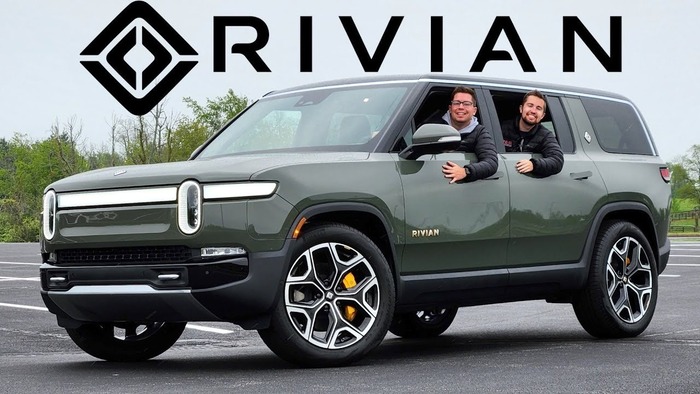
Rivian’s future is met with both optimism and caution. Its partnerships with Amazon and Ford and ambitious production plans signal potential growth.
However, challenges such as production delays, competition, and profitability concerns remain.
Analysts are divided on Rivian’s future. Some believe it could see substantial growth if it scales production, while others caution about risks from supply chain issues and market fluctuations.
The company’s success depends on meeting expectations and overcoming industry challenges.
Comparing Rivian with Other EV Stocks
Rivian’s stock performance is often compared to Tesla, Lucid Motors, and Nio.
- Tesla: Leads in production and profitability, while Rivian is still scaling up.
- Lucid Motors: Focuses on luxury EVs, competing in a different market segment.
- Nio: Innovates with battery-swapping technology and dominates in China, a challenge for Rivian’s global expansion.
Rivian must improve production rates and deal with market uncertainties to compete with established Ford stock performance in the EV transition.
Possible Future Outcomes for Rivian Stock

The EV market is unpredictable, making Rivian’s future stock performance uncertain.
The company could see significant stock growth if production scales and supply chain issues are resolved.
The 2023 production target of 50,000 vehicles could boost investor confidence.
Amazon stock and Ford provide financial backing and a reliable customer base for Rivian’s electric delivery vans. This creates revenue stability and growth potential.
However, risks remain. Competition from Tesla and other EV manufacturers is a concern. Rivian must also finalize its revenue strategy to sustain profitability.
If Rivian meets growth targets, analysts estimate the stock could rise to between $40 and $60.
Investment Strategies: Short-Term vs. Long-Term
Investors can approach Rivian stock with different strategies.
Short-Term Investment Approach
Short-term investors focus on market volatility, aiming to buy low and sell high. Key strategies include:
- Trading on Fluctuations: Rivian’s stock has been volatile since its IPO, creating opportunities for short-term gains.
- Market Reactions: EV industry trends and economic news can impact short-term stock movements.
Long-Term Investment Approach
Long-term investors look at Rivian’s potential growth over several years. Key considerations include:
- Fundamental Analysis: Examining production capacity, financial performance, and market position.
- Growth Potential: Rivian’s partnerships with Amazon and Ford and its niche in adventure vehicles offer strong long-term prospects.
Challenges and Opportunities for Rivian Stock

Several factors impact Rivian’s stock performance:
Challenges
- Production and Supply Chain Issues: The company has faced semiconductor shortages and production delays.
- Strong Competition: Tesla, Lucid Motors, and Nio pose significant challenges.
- High Operating Costs: Expanding production increases costs, raising concerns about profitability.
- Market Volatility: Economic conditions, inflation, and interest rates impact consumer demand for EVs.
- Partnership Dependence: Amazon and Ford’s involvement is beneficial but also a risk if partnerships change.
Conclusion
Rivian’s stock outlook remains both optimistic and cautious. Its focus on adventure vehicles and partnerships with Amazon and Ford give it strong growth potential.
These collaborations provide financial backing and a stable market for Rivian’s electric delivery vans.
However, challenges remain. Rivian must overcome production hurdles, supply chain issues, and intense competition.
Some analysts believe the company will grow if it becomes profitable and scales up production. Others worry that competition and ongoing challenges will limit growth.
The stock could be a promising investment for long-term investors who believe in Rivian’s technology and strategy.
However, overcoming significant obstacles will be necessary for success.